

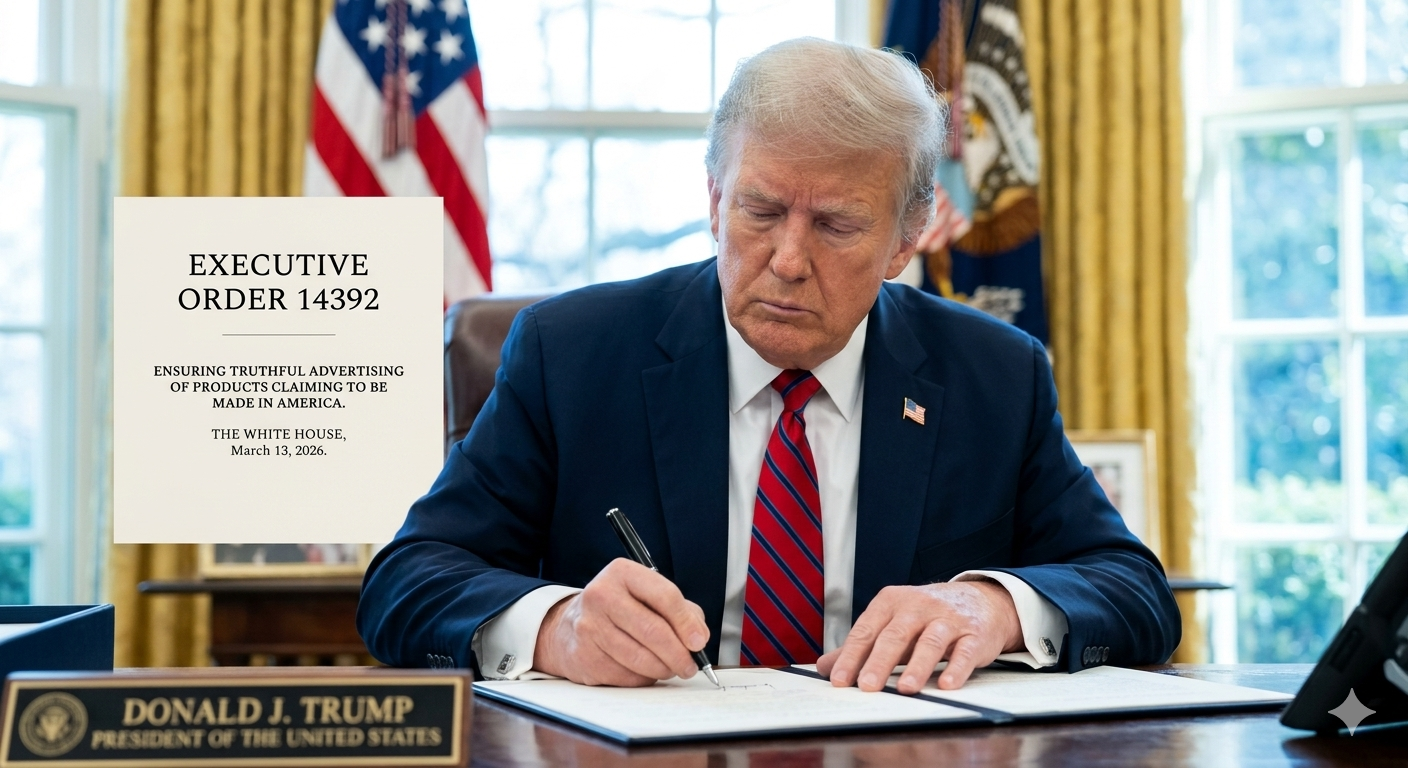
Policy Deep Dive: Understanding the Impact of Executive Order 14392 on "Made in America" Claims
Washington, March 13, 2026 — On this date, President Donald Trump signed Executive Order (EO) 14392, titled “Ensuring Truthful Advertising of Products Claiming to be Made in America.” This directive represents a significant shift in how the U.S. government enforces the authenticity of "Made in USA" claims. Its goal is to protect consumers and businesses by cracking down on false or misleading assertions about product origins, ensuring that only genuinely American-made goods carry the coveted label.
What Is Executive Order 14392 All About?
While the legal definition of what qualifies as "Made in America" remains unchanged—the Federal Trade Commission’s (FTC) 2021 Made in USA Labeling Rule still applies—the executive order transforms enforcement strategy. Instead of relying on complaints to detect fraud, this order mandates a proactive, aggressive stance by federal agencies. The government aims to safeguard the integrity of the “Made in USA” brand, which has become a powerful selling point for American manufacturers.
Four Key Directives That Businesses Need to Know
1. Priority Enforcement by the FTC
The FTC Chair has been directed to make enforcement against false "Made in America" claims a top priority. Companies that falsely claim all or virtually all of a product is domestically made now face intensified scrutiny.
- Legal Standard: Under FTC rules, to label a product simply as "Made in USA," nearly all parts and processing must occur in the U.S. Products with significant foreign content must use qualified claims, such as “Assembled in USA” or “Made in USA with imported parts.”
- What to Expect: The FTC will examine not only product packaging but also all marketing materials—websites, digital ads, and social media platforms are under the microscope. Enforcement may involve substantial civil penalties, sending a clear warning: false claims will cost companies dearly.
2. Holding Online Marketplaces Accountable
One of the EO’s most groundbreaking aspects is expanding responsibility beyond manufacturers to online marketplaces like Amazon and eBay.
- The FTC is tasked with considering new rules that require these digital platforms to actively verify country-of-origin claims made by the vendors using their services.
- Online marketplaces will no longer be passive hosts. Failure to adopt verification procedures could be deemed an “unfair or deceptive practice,” making platforms liable for misleading claims by third-party sellers.
- This pivot promises to drive significant changes in how e-commerce platforms govern product listings, potentially requiring them to enforce stricter oversight or risk penalties.
3. Stricter Verification for Government Procurement
The federal government buys billions of dollars’ worth of products annually under programs like the Buy American Act. EO 14392 tightens oversight of these supply chains.
- Federal agencies managing procurement contracts are now required to regularly audit claims advertising American origin.
- If vendors misrepresent product origins, the government will immediately remove those products from eligible purchase lists.
- Contractors caught in false claims face referral to the Department of Justice for prosecution under the False Claims Act, exposing them to hefty fines and legal action.
4. Coordinated Guidance for Voluntary Labeling
The EO encourages coordination among federal agencies to create clear, consistent guidelines for voluntary country-of-origin labeling.
- This effort will help businesses by minimizing confusion caused by varying interpretations across departments.
- Agencies will consult with the FTC Chair to develop or update regulations, aiming for a unified approach that helps genuine American manufacturers communicate origin claims clearly and compliantly.
What Does This Mean for Industry Stakeholders?
Manufacturers
This is a critical time to conduct internal audits of product claims, carefully review supply chain data, and gather documentation verifying where and how products are made. Companies should clarify claims especially for mixed-origin products, opting for transparent qualified claims when needed.
Government Contractors
Those selling to the government must revisit their Buy American Act certifications and ensure their understanding of the difference between advertising claims and procurement qualifications is thorough. Compliance officers should be especially vigilant during contract bidding and fulfillment.
Online Marketplaces and E-Commerce Platforms
Expect an increasing push to update vendor agreements and implement systems for verifying "Made in USA" claims. Platforms should prepare for possible FTC regulations that demand more active monitoring and enforcement.
Final Thoughts
Executive Order 14392 signals a new era of accountability and enforcement in domestic product advertising. While the standards for "Made in America" claims haven’t changed, the risk of violations being detected and penalized has dramatically increased. For businesses, compliance is not just about honesty — it’s essential for maintaining credibility, avoiding legal penalties, and sustaining the trust of American consumers and government buyers.
You can access the official details in the Federal Register:
Executive Order 14392 of March 13, 2026: Ensuring Truthful Advertising of Products Claiming to be Made in America
Disclaimer: The featured image in this article is a conceptual illustration synthesized using AI for editorial purposes. It does not depict real individuals or events.